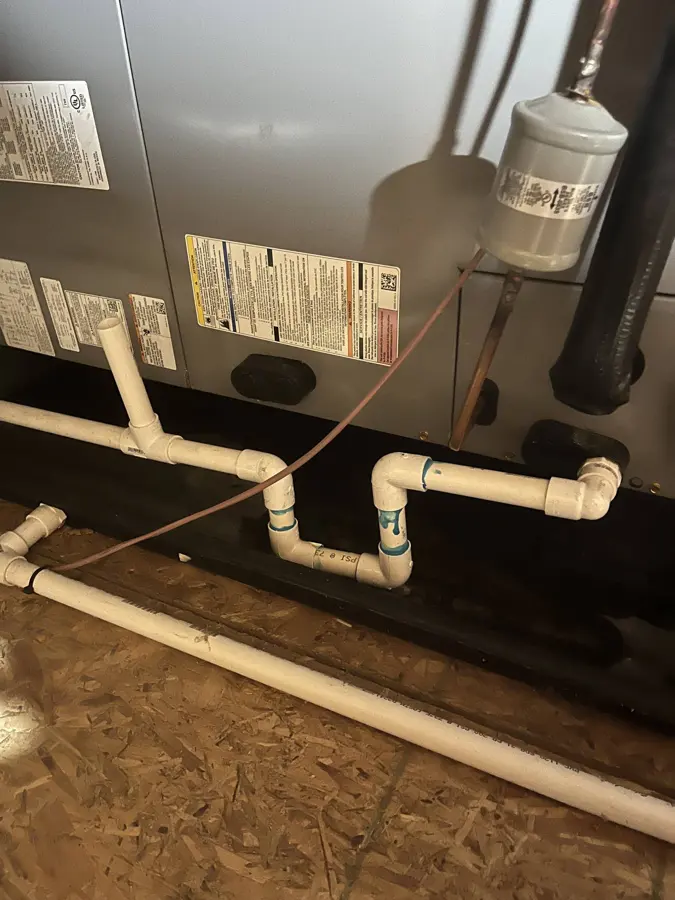
In many two-story Lewisville homes, and in most townhomes, the air handler sits in the attic above a bedroom or hallway. It pulls moisture out of the air all summer and sends it down a small PVC condensate line. Algae and dust clog that line, the primary pan fills, and if the secondary pan or float switch is missing or failed, the overflow goes straight into the insulation and the ceiling below.
The tells of an AC drain leak
- A round or oval stain near a return grille or under the attic access
- Water dripping from a ceiling vent or a light during hot weather
- The AC shutting itself off on a hot afternoon (a float switch doing its job)
- Water dripping from the secondary drain outlet above a window
How the cleanup runs
An HVAC technician clears the drain and checks the pans and switch. The drying team handles what the overflow soaked. Because condensate can sit in the pan for days, it may already be Category 2 by the time it reaches the ceiling, which affects what can be dried in place.
- The tech who does the walkthrough reads the platform, the insulation and the ceiling below with pinless meters and a thermal camera.
- Soaked insulation around the unit is removed.
- Ceiling drywall is dried in place when it is firm, or cut out where it is saturated or sagging.
- Air movers and a dehumidifier run in the attic and the room below until readings match a dry reference.
Water dripping from the ceiling under the AC? Turn the system off at the thermostat, set a bucket under the drip and switch off the lights in that room.
Keeping it from coming back
Most drain line clogs are preventable with a yearly service, a cup of vinegar in the cleanout during the cooling season, and a working float switch. The U.S. Department of Energy central air page covers basic AC maintenance, and the EPA moisture page explains why wet ceilings need to dry quickly.