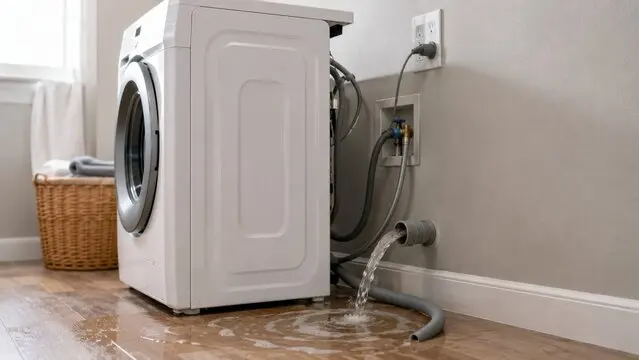
A washing machine fill hose, a dishwasher supply line, a refrigerator ice-maker line or a toilet supply can fail without warning. The leak often starts slowly behind the appliance, runs under cabinets and flooring, and only shows when the floor feels soft or a baseboard swells. Upstairs laundry rooms, common in newer Lewisville homes, add the ceiling below to the list.
The common culprits
- Rubber washer fill hoses that crack with age
- Washer drain hoses that pop out of the standpipe or overflow it
- Dishwasher supply lines and door seals
- Plastic refrigerator ice-maker lines behind the fridge
- Toilet supply lines and fill valves
How the cleanup runs
The extraction crew pulls standing water from the floor. The tech who does the walkthrough maps the wet area under flooring and behind cabinets with pinless meters and a thermal camera.
- Toe kicks are removed and air is directed under the base cabinets.
- Laminate and vinyl plank that trapped water may be lifted; hardwood gets drying mats.
- Walls shared with the laundry or kitchen are read and dried from the cavity.
- Upstairs leaks get the ceiling and walls below checked the same visit.
Cheap insurance: braided stainless fill hoses on the washer, a leak alarm under the dishwasher and the fridge, and a quick look behind the machines twice a year.
Gray water from the washer
Water from a washer drain carries soap, lint and whatever was on the clothes, so it is treated as Category 2. Pad and some porous materials it soaked may need to come out rather than dry in place. The Consumer Product Safety Commission lists appliance recalls, and EPA WaterSense covers finding household leaks.