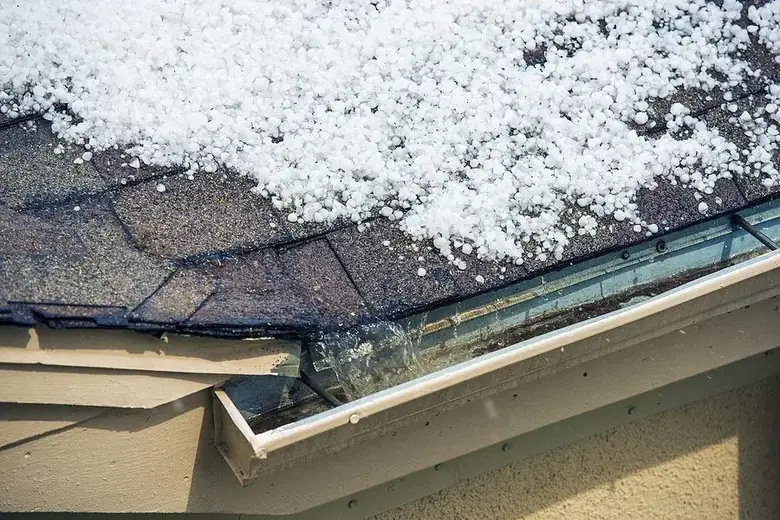
North Texas sits under one of the busiest hail tracks in the country, and spring storms, roughly March through June, regularly drop hail on Denton County. Hail bruises and cracks shingles, dents flashing and knocks granules loose. The roof may look fine from the street, and the first sign inside is often a ring on a ceiling after the next hard rain.
How roof leak water spreads
- Rain enters through a cracked shingle, a lifted flashing or a damaged vent boot
- It runs down the decking and rafters and soaks attic insulation
- Wet insulation presses the water into the ceiling drywall below
- The drywall stains, sags and finally drips at a seam or a light fixture
What the drying team does
A roofer tarps or repairs the roof first, because drying an attic that still takes on rain wastes equipment days. Then the tech who does the walkthrough reads the decking, rafters, insulation and ceiling with pinless meters and a thermal camera.
- Soaked insulation is removed and bagged.
- Sagging or saturated ceiling drywall is cut out; stained but sound drywall is often dried in place.
- Air movers and dehumidifiers dry the attic framing and the rooms below.
- Readings are logged daily until the materials hit the drying goal.
After a hailstorm, look in the attic with a flashlight after the next rain. Damp insulation or a dark spot on the decking means water is getting in before any stain shows downstairs.
Storm claims and documentation
A storm claim usually covers two things: the roof and the interior water damage. Photos of the storm damage, the date of the storm, and the moisture readings from the attic and ceilings all belong in the file. The National Weather Service thunderstorm safety page covers storm safety, and the Texas Department of Insurance has consumer guidance on storm claims. Coverage depends on your policy, so it is worth checking with your own insurer.