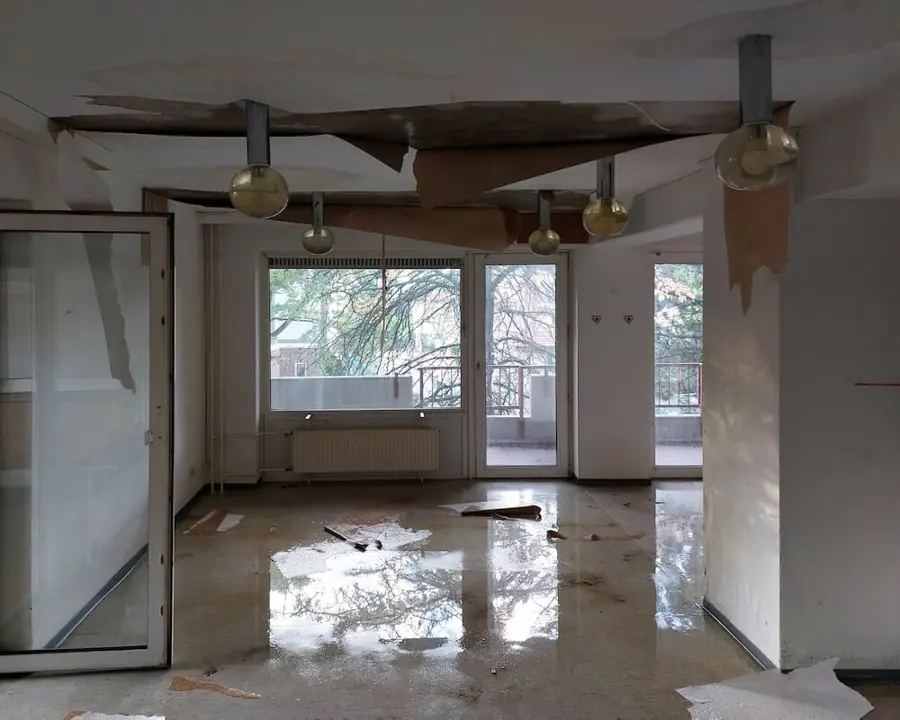
Lewisville has a large stock of apartments, condos and townhomes, much of it along I-35E, around Vista Ridge and near the SH-121 corridor. In a stacked building, water from a failed toilet line, a washer hose or a water heater on an upper floor runs down through the floor system into the unit below, and along shared walls into the unit next door.
What makes apartment leaks different
- The source is often in a unit the affected resident cannot enter
- Water travels through floor cavities and shows up far from the source
- Several parties are involved: residents, owners, the property manager and their insurers
- Breezeway fire sprinkler lines can discharge after a freeze
How the cleanup runs
The response team starts at the source, confirms it is shut off, then works down and across. The tech who does the walkthrough reads every unit that shares a floor, ceiling or wall with the wet area.
- Each affected unit gets its own moisture map, photos and daily readings.
- Extraction and drying equipment is placed unit by unit, sized to each room's class of loss.
- Ceilings in lower units are opened only where readings require it.
- Drying logs are kept per unit, so each insurer sees its own record.
Water coming from the unit above? Tell the property manager right away, photograph the ceiling and walls, and move valuables away from the wet area. Renters' belongings usually fall under the renter's own policy.
Who pays in a multi-unit loss
In a condo or apartment, the building structure and each resident's belongings are often covered by different policies. The Texas Department of Insurance explains renters and condo coverage, and HUD has renter resources. Coverage depends on each policy, so it is worth checking with your own insurer. A per-unit drying record helps every party.