Drying to the standard

Structural Drying in Lewisville, TX

Surface dry is not dry. Structural drying pulls water out of framing, subfloor, drywall and the slab surface, and the equipment stays until the readings prove it. That is the part of the job that decides whether problems come back.

(888) 527-9134Get structural drying set up
IICRC S500 drying standardTruck-mounted extraction24/7 dispatch
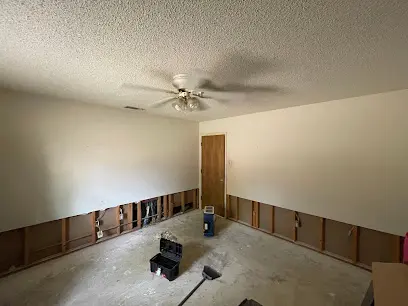
Bedroom with drywall cut away at the base so the wall cavities can dry
Readings decide, not the calendar
StandardIICRC S500
Main toolsAir movers, LGR units
Goal2 to 4 pts of dry reference
ReadingsDaily
Right now

First steps for structural drying and dehumidification in Lewisville

  1. 1

    Leave it running

    Keep drying equipment on and plugged in, day and night.

  2. 2

    Keep doors closed

    Keep the drying area and windows closed so dehumidifiers work.

  3. 3

    Do not move gear

    Leave air movers where they are aimed; placement is deliberate.

  4. 4

    Note changes

    Tell the drying team about new stains, odors or wet spots.

How the work is done

The standard behind structural drying and dehumidification

  • The drying goal is within 2 to 4 points of a dry reference material
  • Class 1 through 4 sets how much equipment a room needs
  • LGR dehumidifiers handle most losses; desiccants handle Class 4
  • Psychrometric readings track the air as well as the materials
Get the drying started today
Typical cost ranges

What does structural drying and dehumidification cost in Lewisville, TX?

In Lewisville, TX, structural drying typically runs $1,000 to $6,500 or more, depending on how many rooms and how many equipment days the job needs. The drivers are the class of loss, the square footage, dense materials like hardwood or plaster, and how fast drying started.

Class 1 or 2

$1,000 to $2,500
  • One or two rooms
  • Air movers and one LGR unit
  • 3 to 4 days typical

Class 3

$2,500 to $4,500
  • Ceilings, walls and carpet wet
  • Several LGR units
  • Cavity drying

Class 4

$4,500 to $6,500+
  • Hardwood, plaster or concrete
  • Desiccant or specialty drying
  • Extended equipment days

Typical ranges, not a quote. For a planning number based on your own rooms, try the water damage cost calculator.

Slip by slip

How structural drying and dehumidification is handled in Lewisville

  1. Slip 01

    Walkthrough and moisture map

    The tech who does the walkthrough finds the source and maps wet materials with thermal imaging and pinless meters before any structural drying and dehumidification equipment goes down.

  2. Slip 02

    Extraction

    The extraction crew pulls standing water with truck-mounted extraction, so it leaves the building instead of wicking into the next room.

  3. Slip 03

    Structural drying

    Air movers set to each room's evaporation load and LGR dehumidifiers pull moisture out of framing, drywall and the slab surface.

  4. Slip 04

    Verify and document

    Readings are logged daily. Equipment comes out when wet materials sit within 2 to 4 points of a dry reference, and the logs go in the claim file.

Structural drying is what happens after the standing water is gone. Framing, drywall, subfloor, cabinets and the top of the slab all hold water that a fan cannot reach. The drying team sets up a controlled drying system and measures it every day until the materials match a dry reference in the same building.

How the drying system is sized

  • Class of loss: Class 1 is a small area of low-porosity material; Class 4 is dense material like hardwood, plaster or concrete that holds water deep
  • Air movers: set to the room's evaporation load, aimed along wet walls and under cabinets
  • Dehumidifiers: LGR units for most losses; desiccant units for Class 4 materials and cool spaces
  • Specialty tools: wall cavity injection, hardwood drying mats and heat when needed

What the daily readings show

Each visit, the drying team records the moisture content of the wet materials at marked points, plus the temperature and humidity of the air inside and outside the drying area. Those psychrometric readings show whether the dehumidifiers are keeping up. When a material stops dropping, the setup gets adjusted: more airflow, a different dehumidifier, or opening a cavity that is trapping water.

Why not just run box fans? Fans move surface air. Without dehumidification, the moisture they lift ends up in the rest of the house, and water inside walls and under floors stays put.

North Texas humidity and drying

Lewisville summers are hot and humid, and spring storm weeks keep the air wet. Opening windows usually adds moisture rather than removing it. A closed drying area with LGR dehumidification controls the air so evaporation keeps going. The EPA moisture control page explains why materials need to dry quickly, and the U.S. Department of Energy covers how humidity and cooling interact in a home.

Coverage

Structural Drying and Dehumidification across Lewisville and nearby cities

The Lewisville restoration crew works every part of the city across ZIPs 75029, 75057, 75067, 75077, from Old Town Lewisville, Vista Ridge, Valley Ridge, Lake Park, Timber Creek out to Flower Mound, Highland Village, The Colony, Carrollton, Coppell and Lake Dallas.

See every area and ZIP covered
Answers

Structural Drying and Dehumidification questions in Lewisville

What does dry to standard mean?

Under IICRC S500, wet materials are compared with a dry reference material of the same kind in an unaffected part of the building. The drying goal is within 2 to 4 points of that reference, confirmed with readings.

How long does structural drying take?

A contained Class 1 or 2 loss usually dries in three to five days. Class 3 losses with ceilings and walls, and Class 4 losses with hardwood, plaster or concrete, take longer.

Why is the equipment so loud?

Air movers push a lot of air across wet surfaces, and dehumidifiers run compressors around the clock. Keeping them on is what shortens the job.

Can I turn the equipment off at night?

It is best not to. Drying depends on steady airflow and dehumidification. Turning units off lets humidity rebuild and adds days to the job.

What is an LGR dehumidifier?

LGR stands for low grain refrigerant. These dehumidifiers pull more water out of the air at lower humidity than standard units, which keeps evaporation going as materials get drier.

Why do some walls get opened?

Insulated walls, walls with vinyl wallpaper and double-layer drywall trap water. A small cut or drilled holes let the drying team push air into the cavity so it dries from the inside.

Emergency water removal

Structural Drying and Dehumidification in Lewisville? Start the dry-out now.

Shut off the water if you can, keep clear of wet outlets and call. The drying team maps the moisture and gets extraction going.

(888) 527-9134Lewisville emergency water removal

Lewisville, TX and the Lewisville Lake cities, Denton County

Find us on Google
Call (888) 527-913424/7