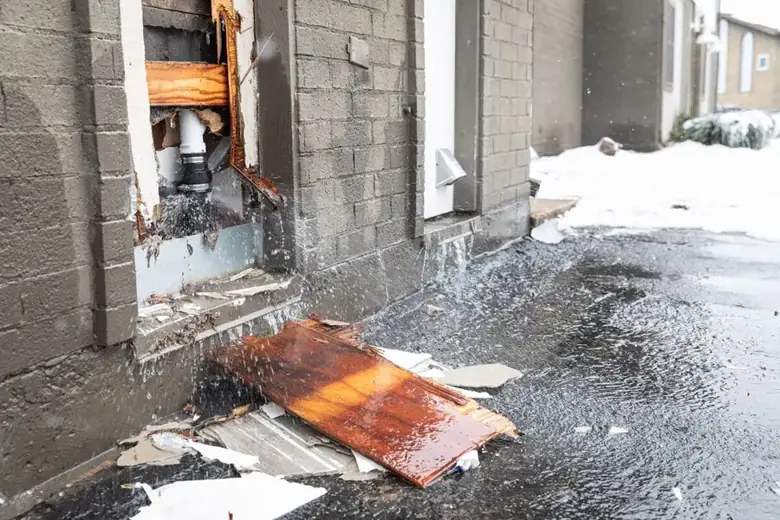
Lewisville homes are designed for heat. Supply lines run through attics and exterior walls with little insulation, and hose bibs sit on the north side in the wind. That works almost every winter. When a real freeze settles over North Texas, as it did in February 2021, the water in those lines turns to ice, expands and splits the pipe. The leak begins when the ice melts.
Where freeze damage starts
- Attic supply runs over garages and bonus rooms
- Kitchen and bathroom lines on exterior walls
- Hose bibs and the pipe just inside the wall behind them
- Fire sprinkler lines in apartment breezeways and attics
How freeze cleanup differs from a single burst
A freeze often splits a line in more than one place, and the damage may not show until pressure returns. The tech who does the walkthrough checks every exposed run, not just the one that is spraying. Attic leaks soak insulation that holds water against the ceiling drywall, so wet insulation comes out before the ceiling can dry.
- The extraction crew clears standing water from floors and garages.
- Ceilings and walls get mapped with thermal imaging and pinless meters.
- Wet insulation is bagged out, and drywall is cut only where readings require it.
- Air movers and LGR dehumidifiers run until framing and drywall read dry.
Before the next freeze: find the main shutoff, drip faucets on outside walls, open sink cabinet doors and disconnect garden hoses. The National Weather Service cold safety page lists the basics.
When the whole street thaws at once
A citywide freeze sends many homes into the same thaw at once, so demand spikes. Photographing every wet area early, keeping the main shut until a plumber can repair the line, and getting on the schedule quickly all shorten the time water sits in the walls. The Ready.gov winter weather page covers safe heating while the power or water is off.