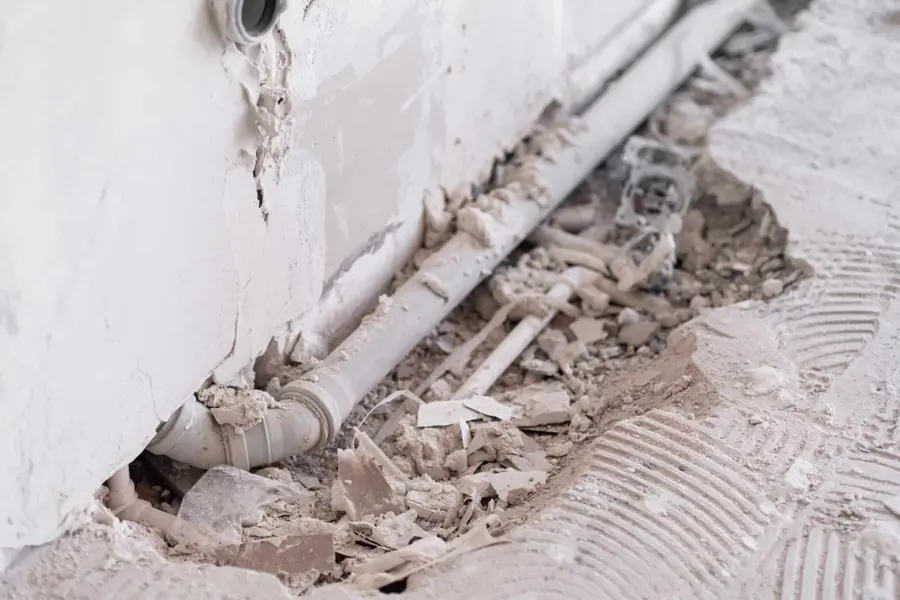
Much of Lewisville was built between the 1970s and the 1990s, and nearly all of it sits on slab-on-grade foundations over expansive clay. The clay swells after heavy rain and shrinks in a dry August. The slab moves a little every season, and over decades that movement cracks or wears through the supply and drain lines cast into the concrete.
The signs of a slab leak
- A warm spot on tile or wood, often near a bathroom or the kitchen
- Carpet tack strip or baseboards wet along one interior wall
- The sound of water moving with every fixture off
- A water meter that keeps turning with the main valve open and nothing in use
- New cracks in the slab or gaps along interior doors after a dry summer
How the work is split
A plumber locates and repairs the break, either by opening the slab or by rerouting the line overhead. The restoration team handles the water the leak left behind. Scheduling the two together means the floor opens once and the drying starts as soon as the repair is done.
- The tech who does the walkthrough maps the wet area with thermal imaging and pinless meters.
- Flooring over the wet footprint is lifted only where the readings say it must be.
- Air movers, LGR dehumidifiers and, for wood floors, drying mats pull moisture out of the slab surface, bottom plates and drywall.
- Readings continue daily until the slab and walls match a dry reference.
Suspect a slab leak? Close the main shutoff, write down the meter reading, and call for a moisture map before anyone starts pulling up floors.
Why concrete takes its time
Concrete holds water and releases it slowly, and a slab that has been wet for weeks keeps giving up moisture for days after the leak stops. New flooring laid over a damp slab traps that moisture and fails early. The drying team signs off on the slab with readings, not with a calendar.
Texas A&M AgriLife Extension publishes homeowner material on North Texas clay soils, and EPA WaterSense explains how to read a water meter to confirm a hidden leak.