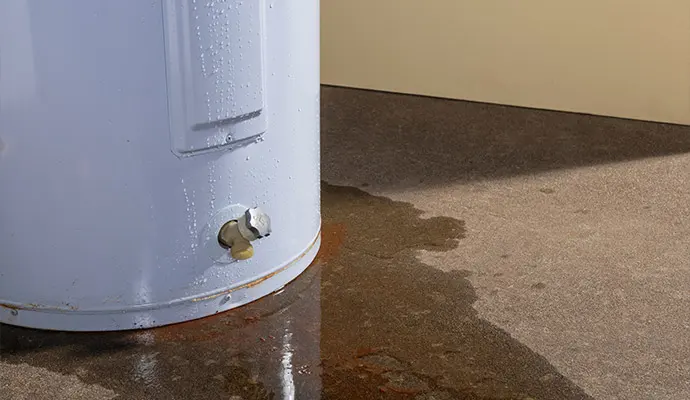
Tank water heaters in North Texas typically last around 8 to 12 years before sediment and corrosion wear through the bottom of the tank or a fitting fails. In Lewisville, the tank is often in the garage, in a hall closet, or in the attic of a two-story home. Where it sits decides how far the water goes.
Where the water goes
- Attic: the drain pan fills, water runs across the ceiling and comes through the drywall below
- Garage: water spreads across the slab and wicks into the bottom of the shared wall with the house
- Interior closet: the drywall and flooring on both sides of the closet soak up water
How the cleanup runs
The extraction crew pulls standing water from the garage slab or the floor below. The tech who does the walkthrough maps the ceiling, walls and floors that the water reached, including the rooms on the other side of a shared wall.
- Wet ceiling drywall under an attic tank is dried in place or cut out, based on readings.
- Baseboards and the bottom of drywall on shared garage walls are opened where they read wet.
- Air movers and LGR dehumidifiers dry the framing and slab edges.
- A plumber replaces the heater; the drying team coordinates timing.
Tank leaking right now? Close the cold water valve on top of the heater. Turn off the gas valve or the breaker for an electric heater before touching anything near the water.
Signs a tank is close to failing
Rust at the base, water in the pan, a rumbling tank and rusty hot water are warning signs. The U.S. Department of Energy water heating page covers maintenance and replacement options, and the Consumer Product Safety Commission lists appliance recalls.