Standing water removal

Water Extraction in Lewisville, TX

Every gallon left on the floor keeps wicking into baseboards, drywall and slab edges. The extraction crew pulls standing water out first, so the drying that follows is shorter and cheaper.

(888) 527-9134Pull the standing water out tonight
IICRC S500 drying standardTruck-mounted extraction24/7 dispatch
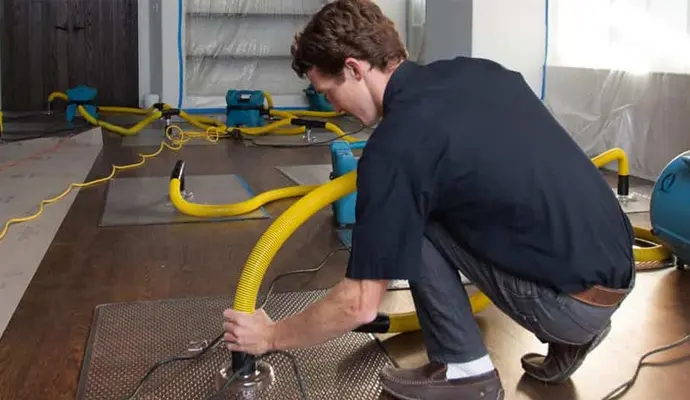
Technician running a yellow extraction hose over a wet hardwood floor
Step one on every water loss
Water categoryAny, usually Category 1
Main toolTruck-mounted extraction
Next stepStructural drying
Drying standardIICRC S500
Right now

First steps for water extraction and removal in Lewisville

  1. 1

    Stop the source

    Close the fixture valve or the main shutoff so no new water enters.

  2. 2

    Kill wet circuits

    If the panel is dry, switch off breakers for rooms with water on the floor.

  3. 3

    Photograph first

    Take wide and close photos of every wet room before anything moves.

  4. 4

    Lift and call

    Get rugs, cords and electronics up off the floor, then call for extraction.

How the work is done

The standard behind water extraction and removal

  • Truck-mounted extraction removes far more water than a wet vac or a shop pump
  • Weighted extraction tools press water out of carpet pad in place
  • Moisture mapping happens before and after extraction, not by eye
  • Category 2 and 3 water gets extracted with the crew in protective gear
Get the drying started today
Typical cost ranges

What does water extraction and removal cost in Lewisville, TX?

In Lewisville, TX, water extraction on its own typically runs $450 to $1,800, and extraction plus a full dry-out usually lands between $1,500 and $6,000. The drivers are the water category, the wet square footage, the material class and how fast extraction started.

One room or hallway

$450 to $900
  • Clean water, one level
  • Truck-mounted extraction
  • Pad pressed out in place

Several rooms

$900 to $1,800
  • Water under cabinets and walls
  • Pad removal where required
  • Readings before and after

Extraction plus dry-out

$1,500 to $6,000+
  • Air movers and LGR units
  • Daily moisture logs
  • Category 2 or 3 handling

Typical ranges, not a quote. For a planning number based on your own rooms, try the water damage cost calculator.

Slip by slip

How water extraction and removal is handled in Lewisville

  1. Slip 01

    Walkthrough and moisture map

    The tech who does the walkthrough finds the source and maps wet materials with thermal imaging and pinless meters before any water extraction and removal equipment goes down.

  2. Slip 02

    Extraction

    The extraction crew pulls standing water with truck-mounted extraction, so it leaves the building instead of wicking into the next room.

  3. Slip 03

    Structural drying

    Air movers set to each room's evaporation load and LGR dehumidifiers pull moisture out of framing, drywall and the slab surface.

  4. Slip 04

    Verify and document

    Readings are logged daily. Equipment comes out when wet materials sit within 2 to 4 points of a dry reference, and the logs go in the claim file.

Extraction is the cheapest drying there is. Pulling liquid water out of a room takes minutes per area; evaporating the same water with air movers and dehumidifiers takes days. That is why the extraction crew starts with the biggest pump on the truck and works from the lowest, wettest point of the house outward.

What extraction covers in a Lewisville home

  • Standing water on slab floors, tile, vinyl plank and hardwood
  • Saturated carpet and pad, pressed out with weighted extraction tools
  • Water trapped under cabinets, toe kicks and baseboards
  • Garages and utility rooms where a water heater or washer let go

Most Lewisville homes are slab-on-grade, so the water has nowhere to drain. It spreads sideways under flooring and wicks up the bottom of every wall it touches. Fast extraction keeps that wicking to inches instead of feet.

Truck-mounted units versus portable pumps

A truck-mounted unit carries its own power and a large recovery tank, so the extraction crew can run long hoses into an upstairs unit or a back bedroom without tripping breakers. Portable extractors come in for tight apartments and stairways. Submersible pumps handle deep water in a garage or a sunken room. The choice depends on how deep the water is and how far it has to travel.

Before the crew gets there: shut off the water source, turn off power to wet circuits if the breaker panel is dry, and lift rugs and electronics off the floor. Take photos before moving anything.

What happens right after extraction

The tech who does the walkthrough re-reads the room with pinless meters and a thermal camera. Anything still wet gets air movers set to the room's evaporation load and an LGR dehumidifier to pull that moisture back out of the air. Readings are logged daily until the materials reach the drying goal. The structural drying page explains that phase in detail.

Flood water and outside water

Water that came in from outside, off a flooded street or the Elm Fork bottomlands, is treated as Category 3 from the start. The Ready.gov flood page covers safety before re-entering a flooded house, and FEMA's flood insurance page explains how flood coverage differs from a homeowner policy.

Coverage

Water Extraction and Removal across Lewisville and nearby cities

The Lewisville restoration crew works every part of the city across ZIPs 75029, 75057, 75067, 75077, from Old Town Lewisville, Vista Ridge, Valley Ridge, Lake Park, Timber Creek out to Flower Mound, Highland Village, The Colony, Carrollton, Coppell and Lake Dallas.

See every area and ZIP covered
Answers

Water Extraction and Removal questions in Lewisville

How much water can a truck-mounted extractor remove?

A truck-mounted unit pulls far more water per pass than a shop vac and carries its own power and recovery tank. That is why the extraction crew uses it first: every gallon removed as liquid is a gallon that does not have to be evaporated over several days.

Can wet carpet be saved after extraction?

Often, when the water is clean and extraction starts quickly. Weighted extraction tools press water out of the pad in place. Carpet touched by sewage or flood water is Category 3 and gets removed, not dried.

Why does the room still need drying after the water is gone?

Extraction removes liquid water, but drywall, baseboards, framing and the slab surface still hold moisture. Air movers and LGR dehumidifiers dry those materials until readings match a dry reference in the same house.

Should I use a shop vac while I wait?

A shop vac on a small spill of clean water is fine if the power is safe. Do not stand in water near outlets or cords, and do not vacuum sewage or flood water. Stopping the source and photographing the damage matter more.

Is water extraction covered by insurance?

Sudden and accidental water, such as a burst supply line, is usually treated differently from flood water or a slow leak. Coverage depends on your policy, so it is worth checking with your own insurer. Extraction photos and moisture readings support the claim either way.

What happens to the furniture in the wet room?

The crew blocks furniture legs on foam or tabs so they stop wicking water, and moves items out of the work area when needed. Anything that cannot be dried gets photographed and listed for the claim file before it leaves the house.

Emergency water removal

Water Extraction and Removal in Lewisville? Start the dry-out now.

Shut off the water if you can, keep clear of wet outlets and call. The drying team maps the moisture and gets extraction going.

(888) 527-9134Lewisville emergency water removal

Lewisville, TX and the Lewisville Lake cities, Denton County

Find us on Google
Call (888) 527-913424/7