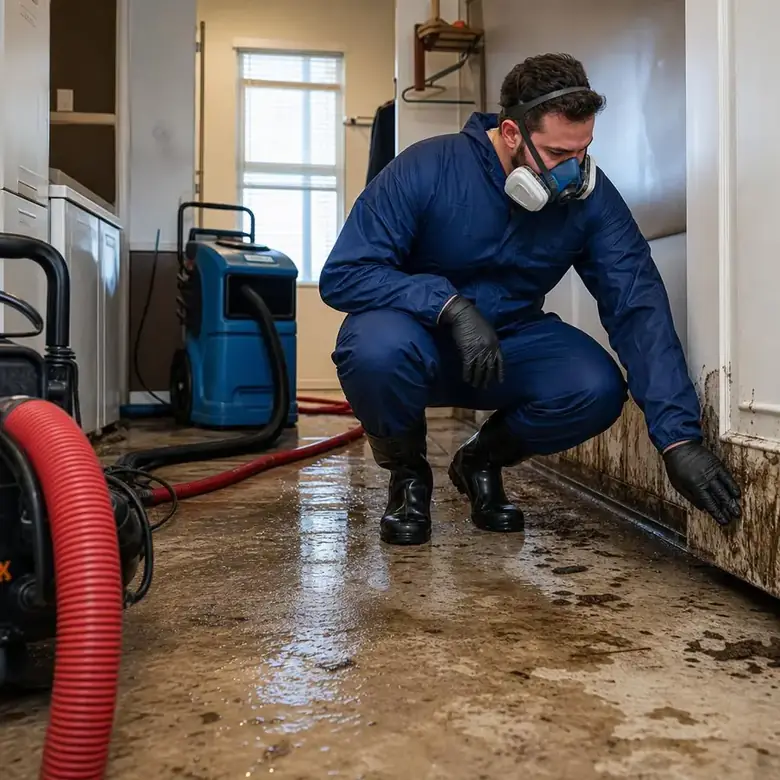
A sewage backup usually starts at the lowest drain in the house: a tub, a shower or a ground floor toilet. In older parts of Lewisville, around Old Town and the neighborhoods built in the 1960s and 1970s, cast iron and clay sewer laterals crack and collect roots. In newer homes, grease, wipes and heavy rain on the city system are more common causes.
What makes sewage different
Sewage carries bacteria, viruses and other contaminants. The IICRC S500 standard treats it as Category 3, and that sets the rules for the whole job.
- The work area is sealed off with plastic containment, and HEPA air scrubbers run inside it.
- The cleanup crew wears respirators, gloves, boots and coveralls.
- Carpet, pad, drywall, insulation and other porous materials the sewage touched are removed and bagged.
- Hard surfaces are cleaned and treated with an EPA-registered antimicrobial at its label dwell time before drying begins.
Minimums before anyone steps in
- Keep children and pets out of the area
- Do not run fixtures that drain to the same line
- Do not try to bleach and mop sewage out of carpet
- Wash hands and change clothes after any contact
Backup in progress? Stop using water in the house, keep everyone out of the affected room, and call a plumber to clear the line and a cleanup crew for the water.
After the cleanup
Once contaminated materials are out and surfaces are treated, the drying team dries the structure to the same S500 goal as any other loss, and the area is cleared before rebuild. The OSHA flood cleanup page describes protective gear for contaminated water, and the EPA moisture page explains why fast drying matters. For outside water, see flash flood cleanup.